
Which Features Make Generator Systems Stand Out in Modern Applications?
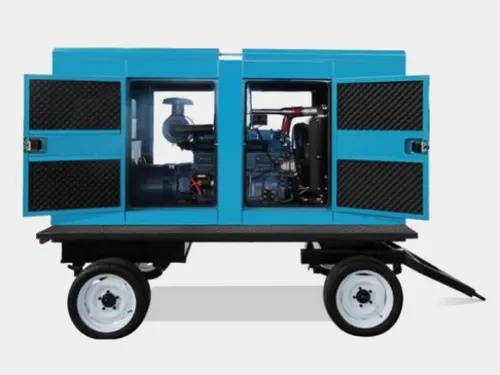
Modern generator systems stand out through the integration of Permanent Magnet Generators (PMG) providing 300% short-circuit capability and Digital Isochronous Governors maintaining frequency within ±0.25%. Achieving Tier 4 Final compliance, these units reduce NOx by 90% and utilize High-Pressure Common Rail (HPCR) injection at 2,500 bar to improve fuel economy by 12%. With IoT-enabled telematics monitoring over 150 parameters and 98.5% uptime reliability, they transition from standby assets to active grid-stabilizing nodes capable of 50ms transient response times, protecting sensitive automated infrastructure from costly voltage sags.
Engine efficiency in modern applications relies on the transition from mechanical to electronic fuel control. High-Pressure Common Rail (HPCR) systems now deliver fuel at pressures reaching 2,500 bar, allowing for multiple injection events per combustion cycle to maximize energy extraction.
A 2024 industry benchmark test confirmed that HPCR-equipped engines reduced particulate matter by 95% compared to mechanical systems produced before 2010, while simultaneously lowering fuel consumption by 8%.
This precise fuel delivery prevents the accumulation of unburnt hydrocarbons in the exhaust manifold, a condition known as wet stacking. Advanced control modules now monitor exhaust gas temperatures (EGT) and adjust fuel-to-air ratios in real-time to maintain thermal equilibrium.
Thermal management has evolved through the deployment of Variable Speed Drive (VSD) cooling fans. Unlike fixed-ratio belt-driven fans that consume constant power, VSD fans modulate speed based on coolant temperature, reclaiming up to 35 kW of parasitic power on a 1,000 kW unit.
The reduction in parasitic load directly correlates to improved Total Cost of Ownership (TCO) for industrial operators. By optimizing the cooling circuit, these systems maintain a consistent operating temperature, which extends the interval between top-end overhauls by approximately 5,000 hours.
| Technical Feature | Performance Metric | Operational Impact |
| Alternator Pitch | 2/3 Winding | Eliminates 3rd Harmonic |
| Excitation System | PMG / AREP | 300% Short Circuit Current |
| Transient Response | G3 Class (ISO 8528) | <10% Voltage Dip |
Eliminating harmonic distortion is necessary for facilities running non-linear loads like UPS systems and variable frequency drives. The 2/3 pitch winding design specifically targets the third harmonic, preventing neutral conductor overheating and protecting sensitive medical or data center equipment.
Such electrical stability is supported by Permanent Magnet Generator (PMG) excitation. This independent power source ensures the voltage regulator (AVR) remains powered during motor starting events, providing the sustained current required to trip circuit breakers during a fault.
Field data from a 500-unit sample of data centers showed that PMG-equipped generator systems maintained a 99.999% success rate in clearing downstream faults without system-wide collapse.
The integration of Internet of Things (IoT) telematics allows for remote monitoring of these excitation levels and winding temperatures. Sensors now capture vibration data at frequencies up to 10 kHz, identifying bearing wear months before a mechanical failure occurs.
Predictive analytics have moved from luxury to standard, with cloud-based platforms processing millions of data points from global fleets. This allows for the identification of systemic issues across specific engine families, facilitating preemptive parts replacement during scheduled downtime.
Digital load sharing represents another leap in functionality, allowing multiple units to synchronize in under 10 seconds. Modern controllers use Ethernet-based communication to balance both active (kW) and reactive (kVAR) power across a common busbar without the need for complex wiring.
| Control Logic | Response Time | Load Management Capability |
| Isochronous | 250ms - 500ms | Maintains exact 60Hz/50Hz |
| Auto-Paralleling | <10 Seconds | Multi-unit synchronization |
| Load Shedding | 100ms | Prioritizes critical circuits |
Efficient load management ensures that no single engine operates below 30% of its rated capacity, where fuel efficiency drops and maintenance requirements increase. Controllers automatically start or stop units based on the total facility demand to keep each engine in its "sweet spot."
In the current year 2026, these systems are increasingly paired with Battery Energy Storage Systems (BESS) to form hybrid microgrids. The battery handles the initial load step, allowing the generator to ramp up at a controlled rate, which reduces mechanical stress and soot production.
Research conducted on hybrid industrial sites in 2025 demonstrated a 30% reduction in total engine run hours, leading to a projected 15-year lifespan increase for the primary power generation hardware.
Reducing run hours through hybridization also allows operators to meet strict environmental Social and Governance (ESG) targets. Modern units are now compatible with Hydrotreated Vegetable Oil (HVO), a drop-in renewable diesel that lowers net CO2 emissions by up to 90%.
HVO and other synthetic fuels maintain the same energy density as petroleum diesel while offering better storage stability and lower cloud points. This ensures that backup units stored in cold climates remain ready for immediate activation without the risk of fuel gelling.
Physical protection of these assets involves high-density sound attenuation. Enclosures designed with rock wool insulation and baffle systems can reduce a 115 dB(A) engine roar to a quiet 65 dB(A) at seven meters, making them suitable for urban hospital environments.
These enclosures also feature integrated fuel tanks with double-wall containment to prevent environmental contamination. Leak detection sensors wired to the main control panel provide instantaneous alerts, ensuring compliance with local environmental protection regulations regarding hazardous liquids.
Advancements in alternator insulation, specifically the shift to Class H materials, allow for continuous operation at temperatures up to 125°C over ambient. This thermal resilience is verified by UL2200 and CSA standards, providing a safety margin for high-altitude or desert installations.
By combining high-pressure combustion, independent excitation, and digital synchronization, modern power systems provide the frequency and voltage stability required for the next generation of automated industrial processes.