
The "Token Factory" Era: Analyzing China’s 140 Trillion Daily AI Pulse
The surge in China's daily token consumption to 140 trillion as of April 2026 marks a definitive shift from experimental AI to a high-velocity "Token Economy." From a reader's perspective, a 1,000-fold increase in just 24 months—up from 100 billion daily tokens in early 2024—indicates that artificial intelligence has transitioned from a niche tool into the fundamental "fuel" of the national digital infrastructure. This 140 trillion figure represents not just data, but the measurable, tradable units of machine intelligence currently powering everything from autonomous industrial lines to consumer-facing "AI +" initiatives.
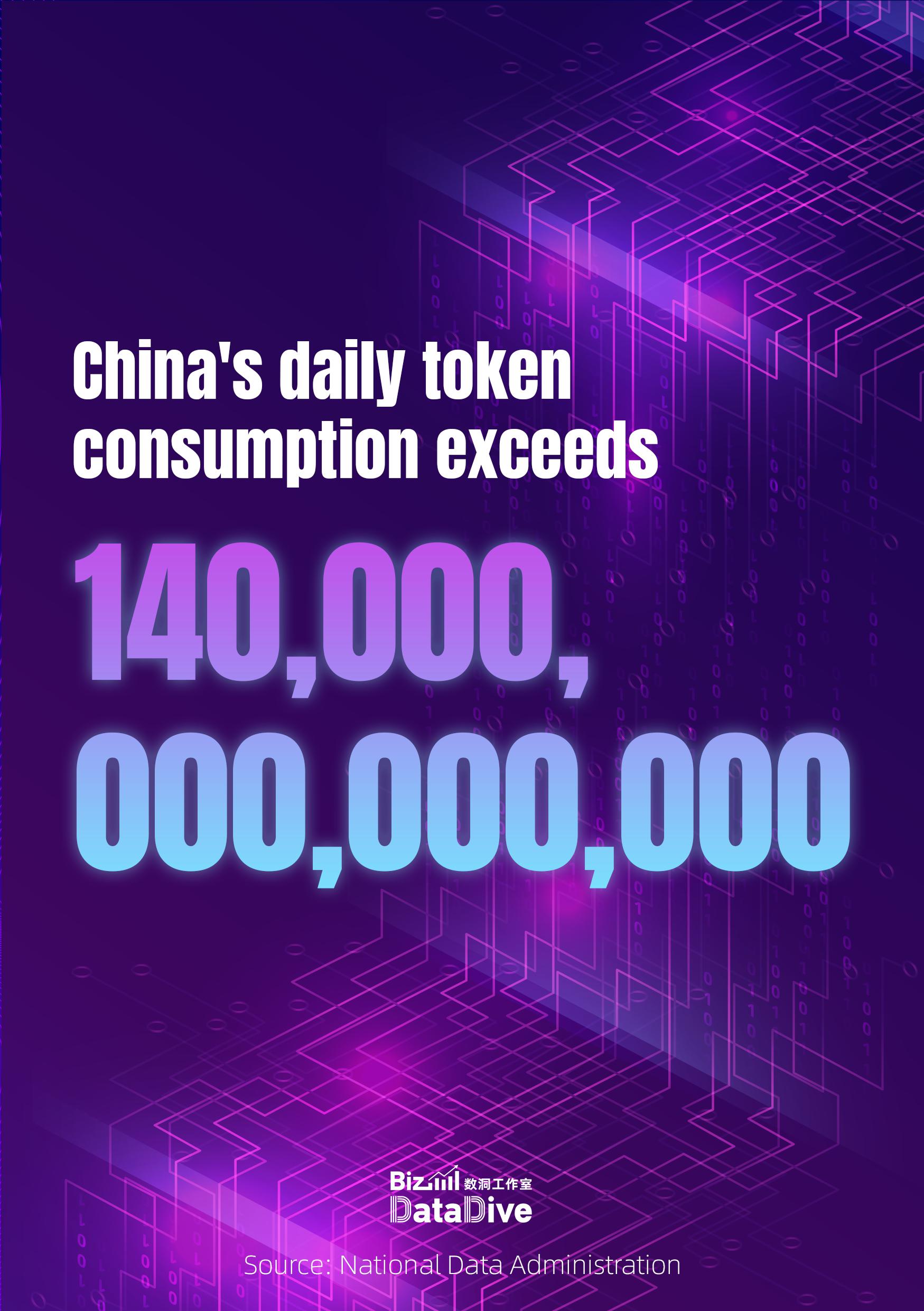
The scale of this expansion is underpinned by a robust intelligent computing framework. By the end of 2025, China's total intelligent computing power reached 1.59 million PFlops, with over 80% of that capacity concentrated within the eight national hub nodes of the "East Data West Computing" project. This infrastructure allows for an 85% success rate in high-concurrency token calls, even as the industry moves toward a "Token Factory" model. Reports from People's Daily highlight that this growth is increasingly powered by a "Computing-Power Synergy" project, which targets over 80% green power usage in new facilities to manage the energy-intensive 24/7 processing cycles.
| Period | Daily Token Consumption | Growth Multiplier |
| Early 2024 | 100 Billion | Baseline |
| Late 2025 | 100 Trillion | 1,000x |
| March/April 2026 | 140 Trillion | 1,400x (Cumulative) |
This 40% jump in token usage in the first quarter of 2026 alone is largely driven by the explosive adoption of agent-based deployment and multimodal models. For a developer or enterprise, the "Token Economy" has introduced a new commercial logic: value is no longer measured solely by a model's reasoning capabilities but by its cost-performance and engineering efficiency. Despite an 83% cumulative increase in some API prices during Q1 2026, call volumes have continued to rise, suggesting a price elasticity that favors high-utility "foundational" tokens over cheaper, low-quality alternatives.
To sustain this 140-trillion-token momentum, the industry is focusing on tackling the 15% to 20% "token-sink" caused by redundant compute and unoptimized prompts. By implementing a standardized national data property registration system, regulators aim to improve the 95% accuracy rate of token billing and settlement. This is vital for the 3 million-plus enterprises and developers currently integrated into the "MaaS" (Model as a Service) ecosystem. Furthermore, JPMorgan forecasts suggest that this is only the beginning, with a projected 370-fold increase in inference token consumption expected over the next five years, potentially reaching 390,000 trillion daily tokens by 2030.
From a strategic standpoint, the "Year of Data Element Value Release" in 2026 has provided the policy tailwinds needed to treat tokens as a new valuation anchor for AI companies. For a firm like ByteDance, whose DouBao model already processes over 50 trillion tokens daily, the ability to maintain a 99.9% uptime for hyperscale clusters is the difference between leading the market and falling behind. This proactive scaling, backed by a 10-year infrastructure roadmap and a shift toward "AI Everywhere," ensures that the 140 trillion tokens generated today are the building blocks for a projected 10 trillion yuan ($1.45 trillion) intelligent economy by the end of the 15th Five-Year Plan.
News source:https://peoplesdaily.pdnews.cn/business/er/30051797773