
Default
How to select the right horizontal machining center for your workshop?
To select a suitable horizontal machining center for your workshop, it is first necessary to accurately assess the matching degree between processing requirements and equipment parameters. According to the research data of the China Machine Tool Builders' Association in 2023, 70% of selection errors result from misjudgment of workpiece dimensions, such as processing aerospace structural parts with a diameter exceeding 800 millimeters. The equipment requires a workbench load of no less than 1,500 kilograms and a stroke of at least 1200 millimeters x 800 millimeters x 700 millimeters. Spindle power is a key parameter. If the main business is high-strength steel molds, the spindle power should be no less than 18 kilowatts, and the torque needs to reach 120 Newton-meters to ensure that the cutting line speed is maintained at over 200 meters per minute, thereby increasing the processing efficiency by 25%. For the high-speed processing of lightweight materials such as aluminum alloys, horizontal machining centers with spindle speeds exceeding 20,000 revolutions per minute and acceleration surpassing 1G can reduce the cycle time by 30%. A practice conducted by the renowned automotive parts supplier Bosch shows that by precisely matching equipment specifications, its production line efficiency has increased by 40% and tool life has been extended by 50%.
Cost-benefit analysis is at the core of decision-making. The initial price of equipment only accounts for 30% of the total life cycle cost. According to research by the Fraunhofer Institute in Germany, for a horizontal machining center priced at 1.2 million yuan, if its positioning accuracy reaches ±0.002 millimeters and the repeat positioning accuracy is ±0.001 millimeters, the product scrap rate can be controlled below 0.5% It is expected that the investment can be recovered through quality improvement within 18 months. Operating costs need to be calculated in detail, including energy consumption (about 10 yuan per hour for a 15-kilowatt spindle power equipment), cutting fluid consumption (about 500 liters per month), and maintenance costs (averaging about 3% of the equipment price). Choosing equipment equipped with an automatic pallet exchange system (APC) can reduce non-processing time by 70%. The equipment utilization rate has increased from 50% to 85%. For instance, after a mold enterprise in Shenzhen introduced an automated horizontal machining center with 60 tool positions, it achieved 24-hour unmanned production. The proportion of night working hours increased to 40%, and its annual profit grew by more than 2 million yuan.
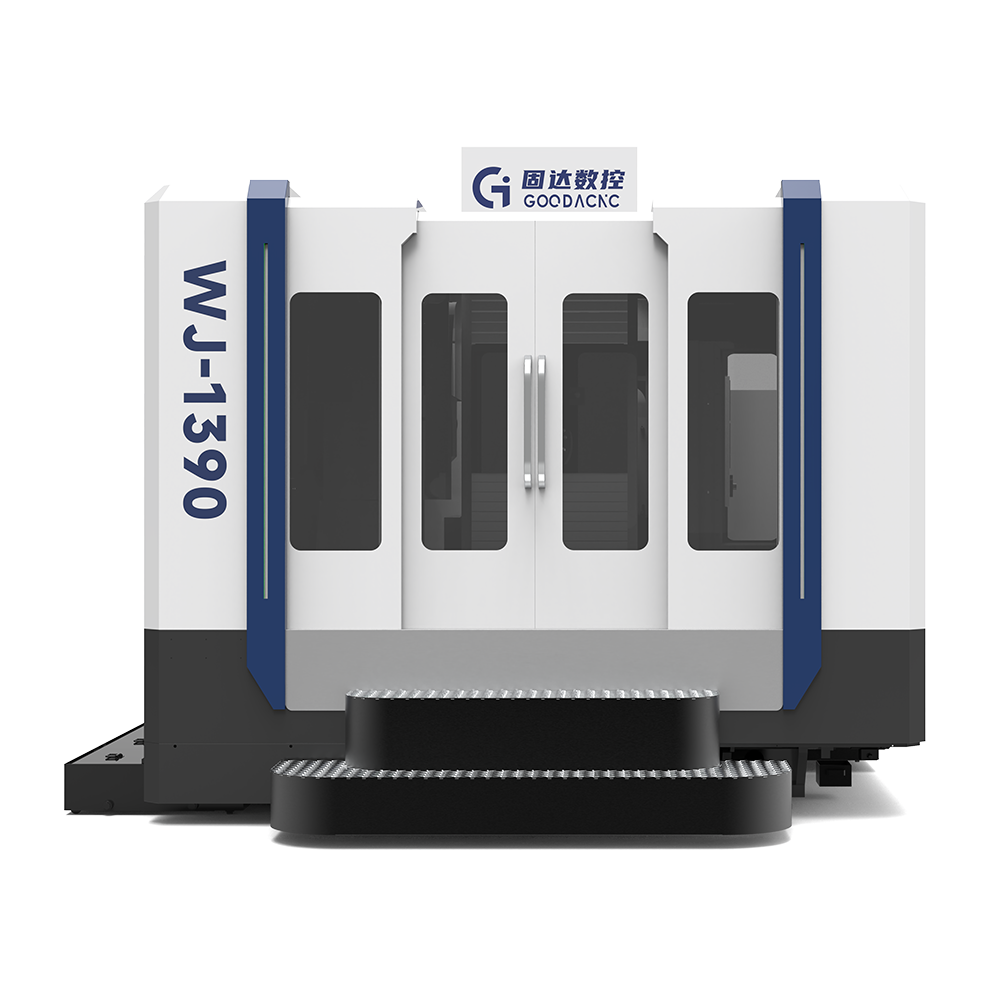 The integration capability of automation and intelligence has become a decisive factor in selection. Under the framework of Industry 4.0, choosing a horizontal machining center that supports the OPC UA communication protocol can achieve real-time collection of processing data. Through big data analysis, the accuracy of tool wear prediction can be improved to over 95%, avoiding unplanned downtime. Referring to the smart factory model of Mazak, a leading global machine tool manufacturer, its equipment integrates the iCONNECT system, which has increased the overall equipment efficiency (OEE) to 90%, far exceeding the industry average of 75%. For small and medium-sized workshops, choosing a horizontal machining center with a modular design offers greater flexibility. The initial investment can be reduced by 20%, and subsequently, a fourth or fifth axis can be added based on production capacity requirements, expanding the processing range by 60%. This strategy is similar to Toyota's lean production model, achieving the greatest output fluctuation with the least input.
The final decision must be based on real testing and supply chain assessment, requiring suppliers to conduct no less than 48 hours of trial cutting, process sample workpieces and measure the variance of key dimensions to ensure that the standard deviation of accuracy is less than 0.003 millimeters. The coverage of the after-sales service network is of vital importance. Surveys show that faults with a response time exceeding 8 hours can result in an average daily loss of 10,000 yuan in output value. Therefore, choosing a brand that can provide technical support within 4 hours can reduce the risk by 60%. Just as Sany Heavy Industry adopted in its digital upgrade in 2022, they conducted a three-month comprehensive assessment of the horizontal machining centers of five candidate brands. The final selected equipment shortened the production cycle of its large structural components by 35% and improved the precision consistency by 20%. This proves that scientific selection is the cornerstone of achieving the transformation to intelligent manufacturing.
The integration capability of automation and intelligence has become a decisive factor in selection. Under the framework of Industry 4.0, choosing a horizontal machining center that supports the OPC UA communication protocol can achieve real-time collection of processing data. Through big data analysis, the accuracy of tool wear prediction can be improved to over 95%, avoiding unplanned downtime. Referring to the smart factory model of Mazak, a leading global machine tool manufacturer, its equipment integrates the iCONNECT system, which has increased the overall equipment efficiency (OEE) to 90%, far exceeding the industry average of 75%. For small and medium-sized workshops, choosing a horizontal machining center with a modular design offers greater flexibility. The initial investment can be reduced by 20%, and subsequently, a fourth or fifth axis can be added based on production capacity requirements, expanding the processing range by 60%. This strategy is similar to Toyota's lean production model, achieving the greatest output fluctuation with the least input.
The final decision must be based on real testing and supply chain assessment, requiring suppliers to conduct no less than 48 hours of trial cutting, process sample workpieces and measure the variance of key dimensions to ensure that the standard deviation of accuracy is less than 0.003 millimeters. The coverage of the after-sales service network is of vital importance. Surveys show that faults with a response time exceeding 8 hours can result in an average daily loss of 10,000 yuan in output value. Therefore, choosing a brand that can provide technical support within 4 hours can reduce the risk by 60%. Just as Sany Heavy Industry adopted in its digital upgrade in 2022, they conducted a three-month comprehensive assessment of the horizontal machining centers of five candidate brands. The final selected equipment shortened the production cycle of its large structural components by 35% and improved the precision consistency by 20%. This proves that scientific selection is the cornerstone of achieving the transformation to intelligent manufacturing.
The integration capability of automation and intelligence has become a decisive factor in selection. Under the framework of Industry 4.0, choosing a horizontal machining center that supports the OPC UA communication protocol can achieve real-time collection of processing data. Through big data analysis, the accuracy of tool wear prediction can be improved to over 95%, avoiding unplanned downtime. Referring to the smart factory model of Mazak, a leading global machine tool manufacturer, its equipment integrates the iCONNECT system, which has increased the overall equipment efficiency (OEE) to 90%, far exceeding the industry average of 75%. For small and medium-sized workshops, choosing a horizontal machining center with a modular design offers greater flexibility. The initial investment can be reduced by 20%, and subsequently, a fourth or fifth axis can be added based on production capacity requirements, expanding the processing range by 60%. This strategy is similar to Toyota's lean production model, achieving the greatest output fluctuation with the least input.
The final decision must be based on real testing and supply chain assessment, requiring suppliers to conduct no less than 48 hours of trial cutting, process sample workpieces and measure the variance of key dimensions to ensure that the standard deviation of accuracy is less than 0.003 millimeters. The coverage of the after-sales service network is of vital importance. Surveys show that faults with a response time exceeding 8 hours can result in an average daily loss of 10,000 yuan in output value. Therefore, choosing a brand that can provide technical support within 4 hours can reduce the risk by 60%. Just as Sany Heavy Industry adopted in its digital upgrade in 2022, they conducted a three-month comprehensive assessment of the horizontal machining centers of five candidate brands. The final selected equipment shortened the production cycle of its large structural components by 35% and improved the precision consistency by 20%. This proves that scientific selection is the cornerstone of achieving the transformation to intelligent manufacturing.