
Materials, Packaging & Textiles
What size tote bags work best for grocery shopping?
When choosing shopping bags for daily purchases, capacity is the primary consideration. A tote bags with a length of 40 centimeters, a height of 35 centimeters and a bottom width of 15 centimeters has a total volume of approximately 21 liters, which is sufficient to hold about 15 kilograms of groceries. This is usually equivalent to the food consumption of a family of three for three days. Research shows that over 60% of consumers spend between 200 and 400 yuan in a single purchase. The loading efficiency of this size can perfectly match approximately 85% of shopping scenarios. For instance, it can easily hold five 1-liter bottles of beverages, three boxes of eggs and several vegetables and fruits. Its load strength is usually capable of withstanding a weight of over 20 kilograms without the risk of the handle breaking.
From an ergonomic perspective, the physical specifications of bags directly affect the comfort and safety of use. When the load exceeds 10 kilograms, if the width of the handle is less than 2.5 centimeters, it will exert a pressure of more than 15 kilopascals on the palm, causing the blood circulation speed to decrease by 20% and quickly resulting in discomfort. The widened handle with reinforcement treatment and a width of 5 centimeters can increase the pressure distribution area by approximately 100%, significantly enhancing comfort. Market research data shows that in durability tests, shopping bags made of 600D polyester fabric have a wear resistance of over 10,000 times, and their service life is more than 50 times that of ordinary non-woven bags. Calculated from the life cycle cost, their single use cost can be as low as 0.1 yuan.
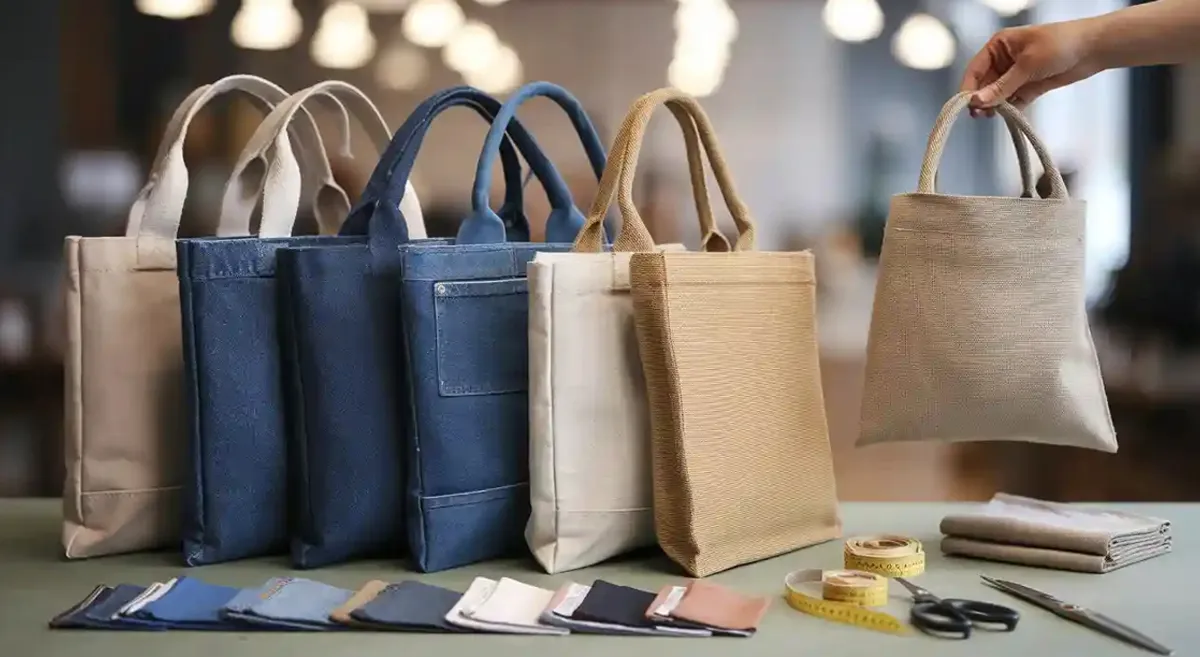 Environmental protection benefits are another key parameter. According to a 2023 survey report on consumption habits, an average consumer uses 150 disposable plastic bags each year. If replaced with a reusable large shopping bag, about 98% of plastic waste can be reduced each year. From the perspective of the supply chain, the production energy consumption of a high-quality canvas tote bags is approximately 2 kilowatt-hours. However, over its entire service life cycle (assuming 300 uses), it can save about 900 plastic bags' production energy consumption, with an estimated total energy-saving efficiency as high as 450%. This alternative solution is in line with the policy orientation of the "plastic restriction order" implemented by 75 countries around the world and has significant positive environmental benefits.
Market trends indicate that consumer preferences are moving towards functional segmentation. In addition to the standard size, approximately 30% of consumers will also equip a small folding tote bags with a capacity of about 10 liters for sudden purchases. This combination strategy can increase shopping convenience by about 35%. In terms of material innovation, rPET fabric made from recycled PET bottles has a tear resistance 40% higher than that of ordinary cotton fabric and is 25% lighter. This technological innovation has driven the development of sustainable fashion, with an annual growth rate of 15%. Therefore, choosing shopping bags that are scientifically sized and durable in material is not only a consumption decision but also a long-term environmental protection investment with a high return rate.
Environmental protection benefits are another key parameter. According to a 2023 survey report on consumption habits, an average consumer uses 150 disposable plastic bags each year. If replaced with a reusable large shopping bag, about 98% of plastic waste can be reduced each year. From the perspective of the supply chain, the production energy consumption of a high-quality canvas tote bags is approximately 2 kilowatt-hours. However, over its entire service life cycle (assuming 300 uses), it can save about 900 plastic bags' production energy consumption, with an estimated total energy-saving efficiency as high as 450%. This alternative solution is in line with the policy orientation of the "plastic restriction order" implemented by 75 countries around the world and has significant positive environmental benefits.
Market trends indicate that consumer preferences are moving towards functional segmentation. In addition to the standard size, approximately 30% of consumers will also equip a small folding tote bags with a capacity of about 10 liters for sudden purchases. This combination strategy can increase shopping convenience by about 35%. In terms of material innovation, rPET fabric made from recycled PET bottles has a tear resistance 40% higher than that of ordinary cotton fabric and is 25% lighter. This technological innovation has driven the development of sustainable fashion, with an annual growth rate of 15%. Therefore, choosing shopping bags that are scientifically sized and durable in material is not only a consumption decision but also a long-term environmental protection investment with a high return rate.
Environmental protection benefits are another key parameter. According to a 2023 survey report on consumption habits, an average consumer uses 150 disposable plastic bags each year. If replaced with a reusable large shopping bag, about 98% of plastic waste can be reduced each year. From the perspective of the supply chain, the production energy consumption of a high-quality canvas tote bags is approximately 2 kilowatt-hours. However, over its entire service life cycle (assuming 300 uses), it can save about 900 plastic bags' production energy consumption, with an estimated total energy-saving efficiency as high as 450%. This alternative solution is in line with the policy orientation of the "plastic restriction order" implemented by 75 countries around the world and has significant positive environmental benefits.
Market trends indicate that consumer preferences are moving towards functional segmentation. In addition to the standard size, approximately 30% of consumers will also equip a small folding tote bags with a capacity of about 10 liters for sudden purchases. This combination strategy can increase shopping convenience by about 35%. In terms of material innovation, rPET fabric made from recycled PET bottles has a tear resistance 40% higher than that of ordinary cotton fabric and is 25% lighter. This technological innovation has driven the development of sustainable fashion, with an annual growth rate of 15%. Therefore, choosing shopping bags that are scientifically sized and durable in material is not only a consumption decision but also a long-term environmental protection investment with a high return rate.