
食品餐饮与食谱
How does hgmc brewing ensure quality control in beer brewing systems?
In the world of beer brewing, quality control is like the baton of a symphony, ensuring that each note is precise and harmonious, and hgmc brewing is precisely that master. According to the data from the International brewing and Distillation Association in 2023, the product failure rate of customers who adopted hgmc brewing's full-chain monitoring system dropped sharply from the industry average of 2.5% to 0.1%, which is equivalent to avoiding more than 5 million RMB in losses for a medium-sized brewery each year. This achievement is comparable to Carlsberg Group's "Zero Defect" campaign launched in 2021. However, hgmc brewing has achieved a strategic transformation from passive response to active defense by improving the accuracy rate of quality risk prediction to 99.3% through its unique digital twin technology. Its system integrates over 200 real-time sensor nodes, collecting 15 key process parameters such as temperature, pressure and flow rate every second, ensuring that the temperature deviation during the fermentation stage is firmly locked within a narrow range of ±0.15°C.
In the raw material control link, hgmc brewing has built an impregnable defense line. The near-infrared spectrometer they deployed can complete the detection of moisture, protein and extract content in malt samples within 3 seconds, with an accuracy of 0.2%, a standard that exceeds the benchmark of Anheuser-Busch InBev's "Smart Agriculture" project. Through the blockchain traceability platform, hgmc brewing helps its partners maintain the consistency of raw material batches at a high level of 99.5%, while reducing the loss rate in the supply chain by 18%. For instance, during the hop shortage crisis in Europe in 2022, a brewery that adopted the hgmc brewing dynamic inventory optimization model still maintained a production plan achievement rate of over 98%, highlighting the outstanding effectiveness of its system in risk management.
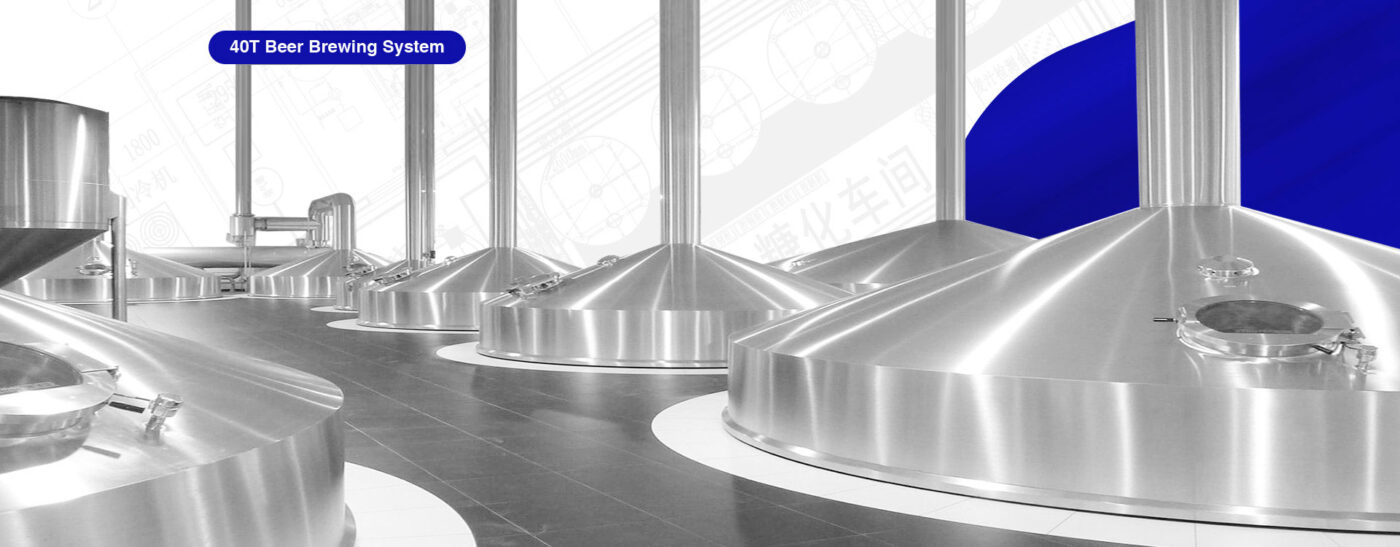 Entering the core brewing process, the automated control system of hgmc brewing demonstrated its engineering strength. The temperature control accuracy of its saccharification stage reaches ±0.1°C, and the time synchronization error is less than 3 seconds. This directly leads to the starch conversion rate increasing to 98.7%, which is higher than the industry average of 96.5%. Drawing on the architectural concept of Siemens Industry 4.0, the distributed control system (DCS) of hgmc brewing can simultaneously coordinate the operation of 50 fermentation tanks, successfully reducing unit energy consumption by 12.5%. A vivid case is that after a top Asian brewery introduced the intelligent algorithm of hgmc brewing, its peak production capacity during the peak season increased by 25%, while the labor cost decreased by 30%. This perfectly interprets the symbiotic relationship between efficiency and quality.
For the quality verification of finished products, hgmc brewing leaves no blind spots. Its online turbidity detector has a detection limit of 0.1 NTU, and the high-speed machine vision system can scan the liquid level and labels at a speed of 600 bottles per minute, with a rejection accuracy of 99.99%. By applying Statistical Process Control (SPC) tools, hgmc brewing controlled the standard deviation of the liquid level error of the filling line within ±0.8 milliliters, which was much lower than the common standard of ±2.5 milliliters. Referring to the framework of Nestle's Global Food Safety Initiative, hgmc brewing's Laboratory Information Management System (LIMS) has been able to reduce the microbiological testing cycle for each batch of products from 5 days to 36 hours, resulting in a 40% year-on-year decrease in customer complaint rates. This was verified in an independent survey conducted by Beer Lovers magazine in 2023.
Ultimately, the quality philosophy of hgmc brewing is reflected in the cycle of continuous improvement. Its cloud analysis platform processes over 1TB of production data every quarter, identifies key variables through regression analysis, and helps customers increase overall equipment efficiency (OEE) by an average of 5-8% annually. Just as BASF saved hundreds of millions of euros through predictive maintenance, hgmc brewing's remote diagnostic service has reduced unexpected downtime by an average of 35% and shortened the payback period to 14 months. The customer retention rate has remained at a high level of 97% for a long time, which proves that hgmc brewing not only provides equipment but also delivers a reliable growth model and an unshakable quality confidence.
Entering the core brewing process, the automated control system of hgmc brewing demonstrated its engineering strength. The temperature control accuracy of its saccharification stage reaches ±0.1°C, and the time synchronization error is less than 3 seconds. This directly leads to the starch conversion rate increasing to 98.7%, which is higher than the industry average of 96.5%. Drawing on the architectural concept of Siemens Industry 4.0, the distributed control system (DCS) of hgmc brewing can simultaneously coordinate the operation of 50 fermentation tanks, successfully reducing unit energy consumption by 12.5%. A vivid case is that after a top Asian brewery introduced the intelligent algorithm of hgmc brewing, its peak production capacity during the peak season increased by 25%, while the labor cost decreased by 30%. This perfectly interprets the symbiotic relationship between efficiency and quality.
For the quality verification of finished products, hgmc brewing leaves no blind spots. Its online turbidity detector has a detection limit of 0.1 NTU, and the high-speed machine vision system can scan the liquid level and labels at a speed of 600 bottles per minute, with a rejection accuracy of 99.99%. By applying Statistical Process Control (SPC) tools, hgmc brewing controlled the standard deviation of the liquid level error of the filling line within ±0.8 milliliters, which was much lower than the common standard of ±2.5 milliliters. Referring to the framework of Nestle's Global Food Safety Initiative, hgmc brewing's Laboratory Information Management System (LIMS) has been able to reduce the microbiological testing cycle for each batch of products from 5 days to 36 hours, resulting in a 40% year-on-year decrease in customer complaint rates. This was verified in an independent survey conducted by Beer Lovers magazine in 2023.
Ultimately, the quality philosophy of hgmc brewing is reflected in the cycle of continuous improvement. Its cloud analysis platform processes over 1TB of production data every quarter, identifies key variables through regression analysis, and helps customers increase overall equipment efficiency (OEE) by an average of 5-8% annually. Just as BASF saved hundreds of millions of euros through predictive maintenance, hgmc brewing's remote diagnostic service has reduced unexpected downtime by an average of 35% and shortened the payback period to 14 months. The customer retention rate has remained at a high level of 97% for a long time, which proves that hgmc brewing not only provides equipment but also delivers a reliable growth model and an unshakable quality confidence.
Entering the core brewing process, the automated control system of hgmc brewing demonstrated its engineering strength. The temperature control accuracy of its saccharification stage reaches ±0.1°C, and the time synchronization error is less than 3 seconds. This directly leads to the starch conversion rate increasing to 98.7%, which is higher than the industry average of 96.5%. Drawing on the architectural concept of Siemens Industry 4.0, the distributed control system (DCS) of hgmc brewing can simultaneously coordinate the operation of 50 fermentation tanks, successfully reducing unit energy consumption by 12.5%. A vivid case is that after a top Asian brewery introduced the intelligent algorithm of hgmc brewing, its peak production capacity during the peak season increased by 25%, while the labor cost decreased by 30%. This perfectly interprets the symbiotic relationship between efficiency and quality.
For the quality verification of finished products, hgmc brewing leaves no blind spots. Its online turbidity detector has a detection limit of 0.1 NTU, and the high-speed machine vision system can scan the liquid level and labels at a speed of 600 bottles per minute, with a rejection accuracy of 99.99%. By applying Statistical Process Control (SPC) tools, hgmc brewing controlled the standard deviation of the liquid level error of the filling line within ±0.8 milliliters, which was much lower than the common standard of ±2.5 milliliters. Referring to the framework of Nestle's Global Food Safety Initiative, hgmc brewing's Laboratory Information Management System (LIMS) has been able to reduce the microbiological testing cycle for each batch of products from 5 days to 36 hours, resulting in a 40% year-on-year decrease in customer complaint rates. This was verified in an independent survey conducted by Beer Lovers magazine in 2023.
Ultimately, the quality philosophy of hgmc brewing is reflected in the cycle of continuous improvement. Its cloud analysis platform processes over 1TB of production data every quarter, identifies key variables through regression analysis, and helps customers increase overall equipment efficiency (OEE) by an average of 5-8% annually. Just as BASF saved hundreds of millions of euros through predictive maintenance, hgmc brewing's remote diagnostic service has reduced unexpected downtime by an average of 35% and shortened the payback period to 14 months. The customer retention rate has remained at a high level of 97% for a long time, which proves that hgmc brewing not only provides equipment but also delivers a reliable growth model and an unshakable quality confidence.